
There’s something reassuring about turning on a tap and knowing the water will be ready when you need it. Whether you’re filling a kettle before work, washing vegetables for dinner, or taking a shower after a long day, you probably don’t want to think about filters, valves, or treatment equipment. That’s exactly why water systems can be easy to forget. They sit quietly in the background until a change in taste, reduced pressure, or an unexpected leak reminds you they’re there.
Like most household equipment, water treatment systems need occasional attention. Regular checks don’t have to become another demanding chore, though. With a practical approach, you can keep track of what needs doing, recognize early warning signs, and avoid some of the frustration that comes with neglected equipment.
Start With the Basics
Before worrying about repairs or replacement parts, get familiar with the equipment installed in your home. Find the owner’s manual, note the model number, and identify the main components. If you have a drinking-water filter beneath the kitchen sink, learn where its cartridges are located. If you use a water softener, understand how its controls work and where the salt goes.
This simple step saves time later. When something changes, you’ll have a better idea of what to check and which instructions apply to your particular system. It also makes conversations with a service technician more useful because you can describe the equipment and the problem clearly.
A sensible ongoing maintenance plans approach begins with knowing what the manufacturer recommends. Different systems have different requirements, and a schedule that works for one household may not suit another. Water conditions, daily usage, equipment design, and the age of the installation all influence how often maintenance is needed.
Keep the information somewhere easy to find rather than tucked away in a drawer with old receipts. A small folder or digital note can hold the manual, installation date, service records, and filter-change history. It isn’t glamorous, but it makes managing the system much easier.
Pay Attention to Changes in Everyday Use
You don’t need to inspect your equipment every morning. Often, the first indication of a problem appears during ordinary household routines.
Perhaps the drinking-water faucet takes longer to fill a glass. Maybe the shower pressure seems weaker, or white deposits begin returning to bathroom fixtures. You might notice an unfamiliar taste after months of normal use. These changes don’t necessarily mean the treatment system has failed, but they’re worth investigating.
Filters gradually collect particles or reach the end of their useful life. In a water softener, a low salt level or regeneration problem can affect performance. Reverse osmosis equipment may produce less water if a filter becomes restricted, the membrane needs attention, or the incoming pressure is insufficient.
The important thing is not to assume that every symptom has the same cause. Low pressure, for example, can originate in household plumbing rather than the treatment unit. Similarly, recurring stains may reflect changes in the incoming water instead of a simple filter problem.
Make a note of when the change began and whether it affects one faucet or the whole house. If the problem persists, a water test or professional inspection can help identify what’s happening.
Don’t Put Off Filter Changes
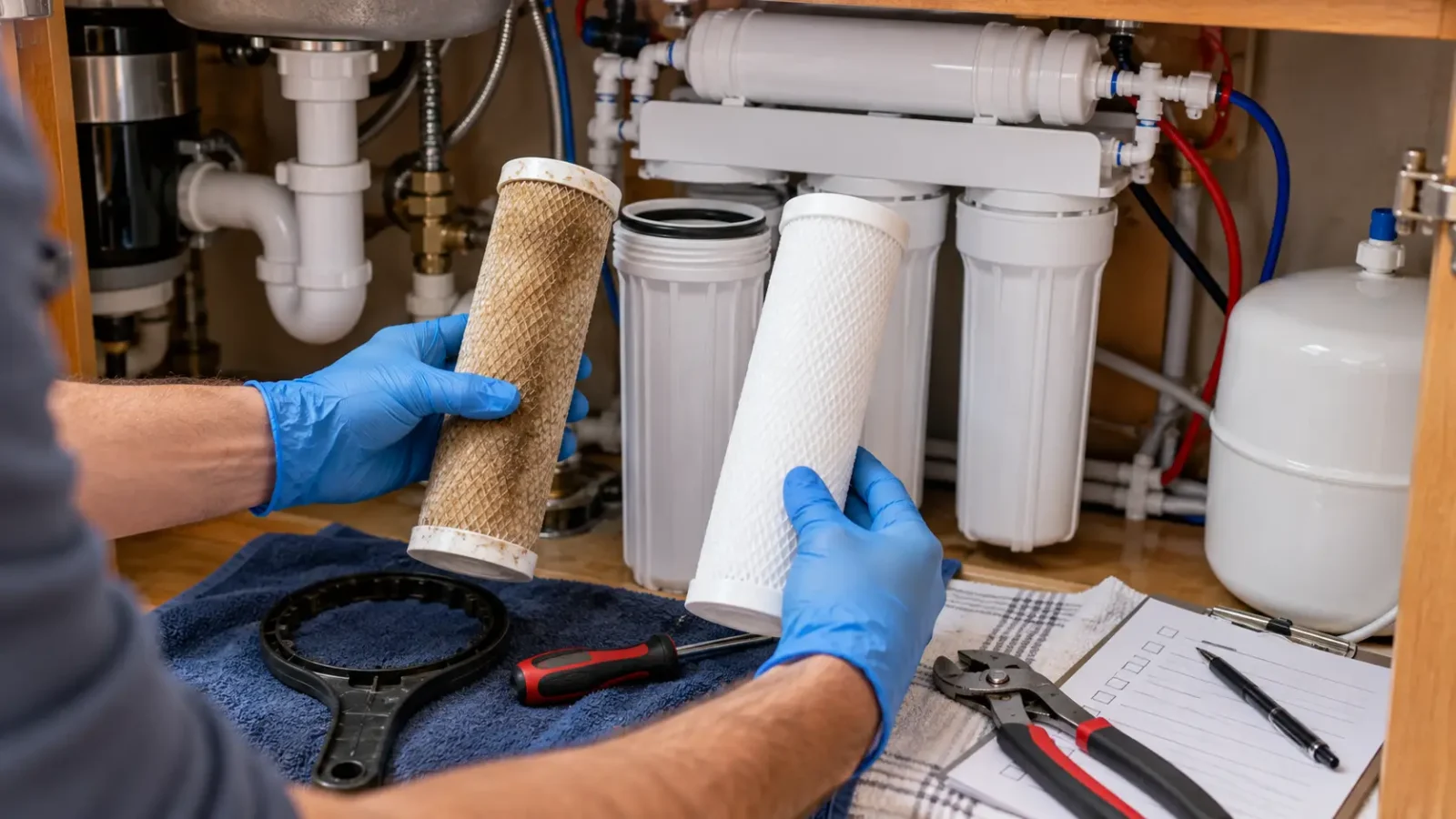
Filters are among the easiest parts of a treatment system to overlook. They’re usually hidden away, and there’s rarely a convenient reminder when a cartridge reaches the end of its service life.
Following the manufacturer’s instructions for filter replacements helps maintain the performance the equipment was designed to deliver. The correct interval depends on the filter type, water conditions, and amount of use. A household dealing with heavy sediment may need more frequent attention than one with relatively clean incoming water.
Avoid waiting until the water tastes different before replacing a cartridge. Some filters are designed to reduce substances that cannot be detected by taste or appearance, so a normal-looking glass of water doesn’t prove the filter is still performing as intended.
It’s also important to use compatible replacement parts. Two cartridges may look almost identical while having different capacities or performance specifications. Check the model number and any relevant certification information before buying a replacement.
After changing a cartridge, follow the manufacturer’s flushing and startup instructions. Some systems require water to run through the new filter for a specified period before the water is ready for normal use. Taking a few extra minutes here can help avoid problems caused by skipping an important step.
Give Water Softeners Their Own Routine
Water softeners have different needs from ordinary drinking-water filters. Traditional salt-based models use ion exchange to reduce calcium and magnesium, the minerals mainly responsible for water hardness. These systems periodically regenerate to restore their treatment capacity.
Check the salt level at the interval recommended by the manufacturer, and use the type of salt specified for your equipment. Avoid filling the tank beyond the recommended level. If a hard crust forms inside the tank or the unit appears to be using salt unusually quickly, consult the manual or arrange an inspection.
You may notice signs that hardness is returning, such as scale on showerheads or spots on glassware. These clues can be useful, but they aren’t conclusive on their own. A water-hardness test can help determine whether the softener is working as expected.
Remember that softening isn’t the same as purification. A softener is designed primarily to reduce hardness minerals, not to remove every contaminant. If your household has other water-quality concerns, those should be assessed separately.
Know When Professional Help Is Worth It
Some tasks are manageable for homeowners, but others involve pressurized plumbing, electrical connections, or internal components that require specialist knowledge. A small leak around a fitting, unusual equipment noise, or a repeated drop in performance may need more than a quick adjustment.
If you’ve followed the manufacturer’s basic troubleshooting instructions and the issue remains, it may be time to schedule service with a qualified technician. Before booking, explain the symptoms, when they started, and what you’ve already checked. This information can help the technician prepare for the visit.
Ask what the inspection includes and whether diagnostic fees apply. If repairs are recommended, request a clear explanation of the problem, the work required, and the estimated cost. You don’t need to understand every technical detail, but you should know why the proposed work is necessary.
A thorough inspection may involve checking connections, reviewing settings, examining replaceable components, and confirming that the equipment is operating within its expected range. The exact process depends on the system and the symptoms.
Keep Maintenance Manageable
A maintenance routine works best when it fits naturally into your life. Add filter dates to your calendar, check for visible leaks occasionally, and keep service records in one place. If your system has a display or warning light, learn what its indicators mean rather than ignoring them until a problem develops.
You should also consider the condition of the incoming water. If the taste, color, or odor changes suddenly, don’t assume the treatment system is responsible. Contact your water supplier when appropriate, and arrange suitable testing if you suspect a water-quality issue. Clear water isn’t necessarily free from every contaminant, so health-related concerns deserve proper investigation.
For older equipment, compare the cost of continued repairs with the cost of replacement. Replacing a system isn’t always necessary simply because it has reached a certain age. Its condition, performance, parts availability, and operating costs are more useful factors to consider.
A Reliable System Begins With Simple Habits
Taking care of your water equipment doesn’t require constant attention or technical expertise. It requires a little consistency, a willingness to notice changes, and an understanding of when to ask for help.
Regular checks, timely filter changes, and appropriate professional servicing can help keep a system operating as intended. They can also make household expenses more predictable by reducing the likelihood of avoidable breakdowns.
Most importantly, maintenance should give you confidence rather than create another source of worry. Learn your system’s needs, keep a few useful records, and deal with small concerns before they grow. It’s a modest investment of time that can make everyday water use simpler, more dependable, and easier to manage over the years.