
You spend Saturday morning cleaning the bathroom, polishing the faucets, and wiping down the shower doors. By Tuesday, those annoying white spots are back. Sound familiar? It’s a frustrating experience for many homeowners, particularly those living in areas with high mineral concentrations in their water supply.
Hard water doesn’t always get the attention it deserves. People often blame their cleaning products or aging appliances without realizing that the water itself could be contributing to the problem.
Fortunately, managing household water hardness doesn’t have to be complicated. With a better understanding of mineral buildup and suitable treatment methods, homeowners can make practical improvements that simplify everyday living.
Where Does Mineral Buildup Come From?
Water naturally collects dissolved minerals as it travels through soil and underground rock formations. Calcium and magnesium are particularly common, and higher concentrations of these minerals contribute to water hardness.
When water evaporates, the dissolved minerals remain behind. Over time, repeated exposure can create chalky deposits that become increasingly difficult to remove.
Hard water can leave white scale on faucets and fixtures, making even recently cleaned surfaces appear neglected. Showerheads, kitchen sinks, and glass shower doors are especially prone to these deposits.
Hardness levels vary considerably between locations. Even neighboring communities may experience different water conditions depending on their supply sources and treatment processes.
The Problems Go Beyond Bathroom Stains
Visible mineral deposits are irritating enough, but they’re only part of the picture.
Inside water heaters, mineral scale can gradually accumulate around heating elements or other internal surfaces. Significant buildup may interfere with heat transfer, potentially reducing energy efficiency.
Dishwashers and washing machines can experience similar challenges. Small openings in showerheads may also become partially blocked, affecting water flow.
Then there’s laundry. Hardness minerals can interfere with washing performance, sometimes leaving fabrics feeling less comfortable than expected.
None of these issues necessarily develops overnight. That’s what makes hard water particularly troublesome. Its effects tend to accumulate quietly until maintenance becomes more frequent or equipment starts showing signs of wear.
How Water Softeners Help Reduce Mineral Deposits
Rather than repeatedly removing stubborn stains, many homeowners prefer addressing the problem at its source.
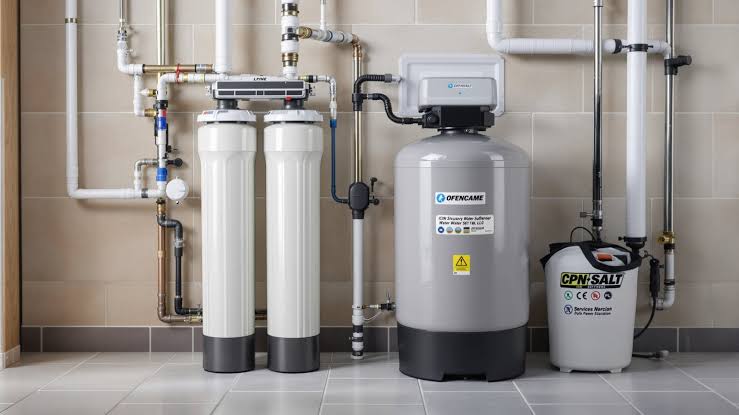
Installing water softeners for mineral buildup can help reduce the concentration of hardness minerals before water reaches household plumbing and connected appliances.
Traditional water softeners generally operate through a process called ion exchange. Inside the equipment, specialized resin captures calcium and magnesium ions and replaces them with sodium or potassium ions.
Reducing hardness helps limit the formation of new mineral deposits throughout the treated water supply.
It won’t magically remove years of existing scale, but it can make future buildup easier to manage. For households constantly battling mineral stains, that’s a welcome change.
Small Improvements That Make Everyday Life More Comfortable
The benefits of softened water aren’t limited to plumbing protection. Some of the most noticeable differences appear during ordinary household activities.
Soap typically lathers more easily in softened water. Dishes may develop fewer mineral spots, and bathroom surfaces can become easier to maintain.
Laundry may feel softer, too, depending on detergent choices and washing conditions.
There’s something satisfying about taking clean glassware out of the dishwasher without immediately reaching for a polishing cloth. It’s a small thing, admittedly, but these everyday conveniences can add up.
Spending less time dealing with stubborn mineral residue means having more time for things you’d actually rather be doing.
Finding a Treatment Approach That Suits Your Household
Every property has different water requirements. A small apartment with one bathroom doesn’t necessarily need the same equipment as a large family home with multiple showers and heavy laundry demands.
Professional residential water conditioning can help homeowners identify suitable treatment methods based on water hardness, household consumption, plumbing arrangements, and individual preferences.
Some properties may benefit from traditional salt-based softening, while others might consider salt-free scale control technologies.
It’s worth understanding the distinction. Salt-free conditioners generally aim to manage scale formation rather than remove hardness minerals from the water.
Reliable water testing helps homeowners compare these options and avoid paying for equipment that doesn’t address their specific concerns.
Is a Water Softener Worth the Expense?
Installing treatment equipment requires an initial investment, and understandably, homeowners want to know whether the benefits justify the cost.
Consider how much time and money you currently spend managing hard water problems. Specialized cleaning products, appliance servicing, and frequent descaling can become ongoing expenses.
Reducing hardness may help lower some of these costs while supporting equipment performance.
However, potential savings depend on water conditions, system efficiency, installation expenses, and maintenance requirements.
Rather than expecting immediate financial returns, think of water softening as a long-term investment in household comfort and property maintenance.
Keeping Your Water Softener in Good Condition
Once installed, a water softener needs occasional attention. Fortunately, maintenance is generally manageable.
Salt-based equipment requires periodic salt replenishment, while routine inspections can help identify performance issues. Following the manufacturer’s maintenance recommendations is particularly important.
If mineral spots begin returning unexpectedly or soap performance changes noticeably, the equipment may need servicing.
Don’t overlook periodic hardness testing either. It offers a straightforward way to check whether your system is performing as intended.
Remember that water softening doesn’t replace drinking water purification. Additional filtration may be necessary to address unrelated water quality concerns.
A Cleaner Home Starts With Better Water
Hard water might be a familiar household inconvenience, but constantly fighting mineral deposits doesn’t have to become part of your routine.
Understanding your water supply and choosing suitable treatment equipment can help protect appliances, simplify cleaning, and improve everyday comfort.
Start with water testing, explore your options, and choose a solution that fits your household’s actual needs.
After all, a comfortable home isn’t always about expensive renovations or dramatic upgrades. Sometimes, it’s the practical improvements working quietly behind the scenes that make the biggest difference.